For the organisation · 02

Master Training

For HR and Learning & Development teams that need a design partner for a complete leadership programme — not a facilitator who shows up, runs through slides and leaves.

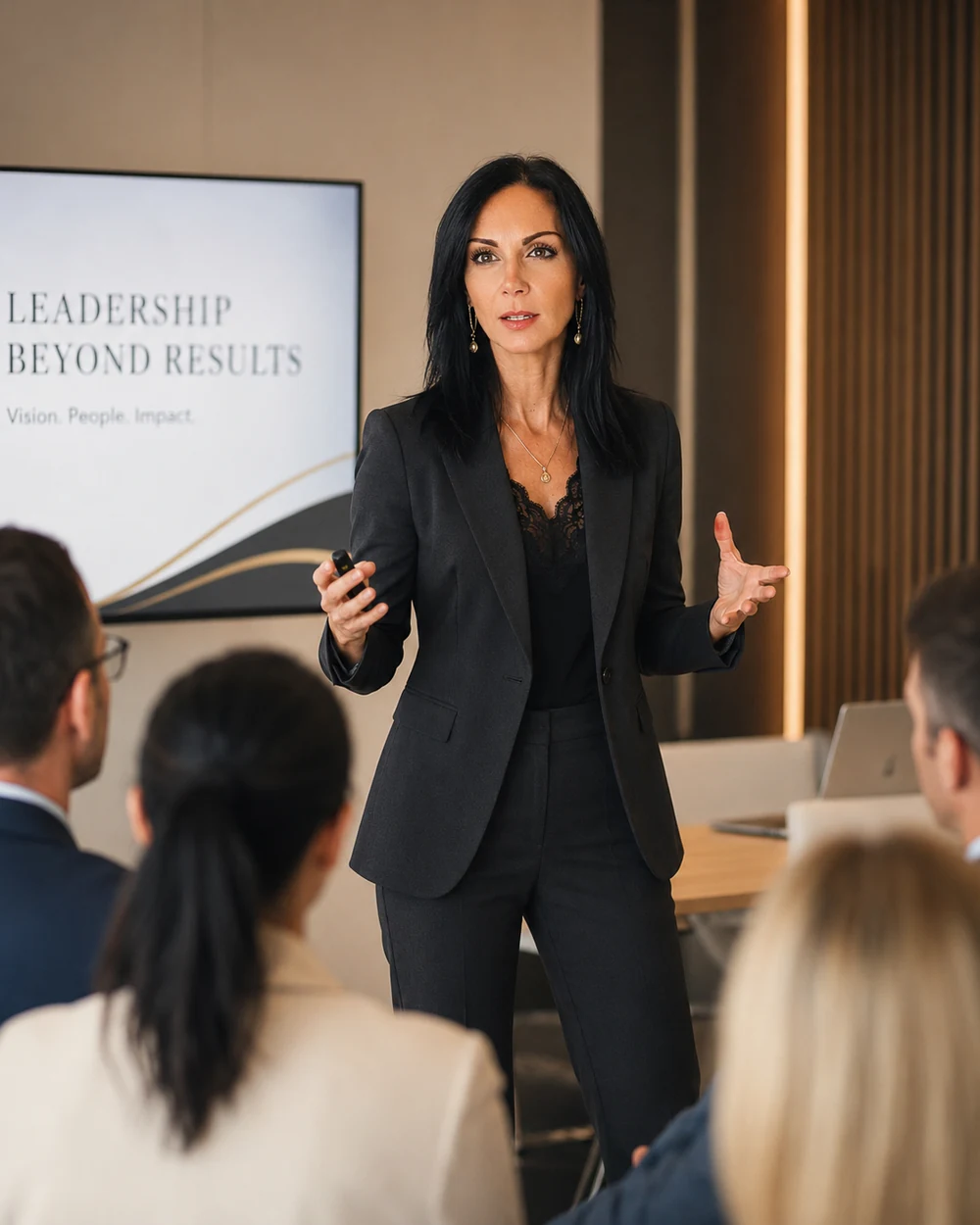
Eleonora Pizzutti facilitating a management training session
ACC International
Coaching Federation
How I position myself

Not a trainer.
A project partner.

The difference is made in the design phase, not in the room.

I work with HR and L&D from needs diagnosis through to final impact measurement. That means understanding the organisational context, business objectives, participant maturity and company culture before writing a single line of content.

For programmes involving large populations, I draw on a carefully selected network of trainers and facilitators who share the same methodological approach and quality standards. The team changes; the method doesn't.

The result is a coherent programme — not a catalogue of pre-packaged modules assembled together.

Areas of intervention

The programmes
I design and deliver

Six main thematic areas. They can be standalone interventions or modules integrated into a broader programme.

01

Managerial
leadership

From first coordination role to senior manager. How to build credibility, manage people with different needs, give feedback that actually changes behaviour, delegate without losing oversight. Leadership as daily practice, not abstract concept.

02

Multigenerational
management

Five generations in the same office, five completely different relationships with work, feedback, autonomy and career. Programmes that turn difference into complementarity — with operational tools, not theories.

03

Emotional intelligence
and change

Based on the Six Seconds model. How to recognise your own emotions under pressure, manage team reactions, lead organisational change by working with people's emotional energy — not against it.

04

Wellbeing and mental
health at work

The manager as the first line of defence for team wellbeing. Recognising signs of psychological fatigue, holding difficult conversations, providing support without playing therapist. A competency that must be built with method.

05

Diversity
& Inclusion

Inclusion as a genuine competitive advantage. Programmes that go beyond awareness and build concrete skills: bias management, inclusive communication, creating environments where differences generate real value.
Explore the Two Lenses Matrix© →

06

Mindset and
high performance

For high-potential populations and managers who want to improve the quality of their decisions and their own sustainability in the role. Limiting beliefs, energy management, strategic focus.
Current context

Leadership and human skills
in the AI era

Artificial intelligence can accelerate analysis, processes and productivity. But it doesn't replace a manager's ability to read a room, navigate a difficult conversation, build trust, give meaning to change or make decisions in ambiguous situations.

That's why training programmes focus on the human competencies that become even more critical in organisations undergoing change: contextual judgement, emotional intelligence, relational authority, managing ambiguity and the ability to lead teams under pressure.

Format flexibility

How a programme
is structured

Intensive

Workshops and classroom

From half-day to multi-module programmes. Any group size, in-person or remote. Experiential methodology: simulations, cases and activations that engage participants — rather than keeping them sitting and listening.

Distributed

Blended formats

Alternation between classroom sessions, asynchronous activities, micro-learning and follow-up sessions. Designed to maximise transfer: what's learned in the room must become real behaviour in daily work.

Structured

Leadership programmes

Annual or multi-year programmes for management populations. With modular logic, learning communities, integrated individual coaching and structured HR reporting. The most effective format for lasting cultural change.

How I measure impact

Without measurement,
it's just intuition.

Every programme includes a structured monitoring system that tracks change over time and provides concrete evidence to the sponsor.

Not to prove the work was done, but to see whether something actually changed — in behaviours, not just perceptions.

Self-Assessment
Perceived evolution

Administered at the start and end. Before/after comparison on key competencies using a numerical scale.

Behavioural checklist
Actions taken

Tracks behaviours concretely put into practice in the pre, during and post phases of the programme.

Session journal
Reflection and sentiment

Completed at the end of each session. Collects insights, reflections and emotional climate indicators for the group.

Final HR report
Integrated reading

Integrates all data: competency evolution, behaviours practised, observed impacts. Within individual confidentiality.

Have a project
in mind?

Tell me about the context, the population and the objective. We'll work out together whether and how I can be useful.

Discuss your project → Frequently asked questions →